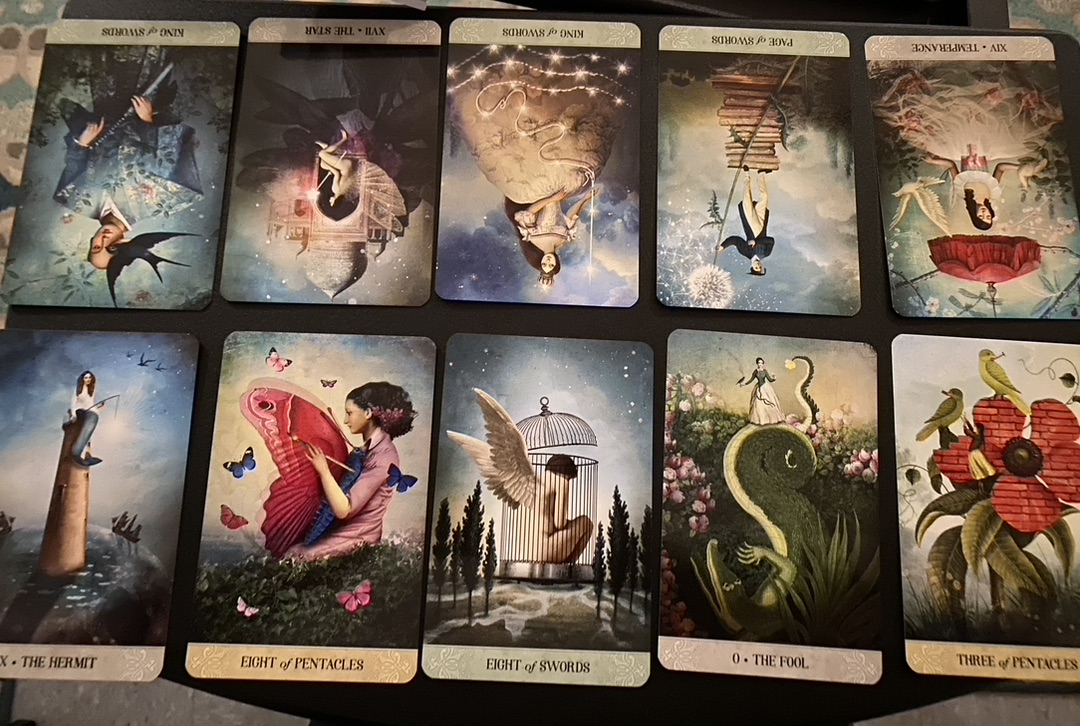
As someone who has been studying and reading the cards for 28 years (I was ten when I started so I’m not THAT old), I have a vastly different understanding of the Tarot and its possibilities than the average person whose experience with the system is limited to passing glances at signs reading “Psychic Tarot Reader” or the like at fairs, carnivals, and tourist traps.
Similarly, as a professional dance teacher (ballet, tap, jazz), I find myself bewildered when people ask me to tutor them in the subtleties of club dancing, the foxtrot, or ballroom. Those are just not what I do and, as a result, I’ve forgotten that those styles exist within the domain of “dance,” as understood by most people.
This same phenomenon is why I am startled sometimes to hear someone ask me to “tell their fortune” or to be treated like a Magic 8 ball–a playful source of answers that can be shaken up at will time and again until your “Better Not Tell You Now” becomes a “Yes Definitely.” Just like with club dancing, that is simply not what I do and not what I spent years studying for.
So what is the Tarot for, then? And why should anyone take this “fortune telling” system seriously?
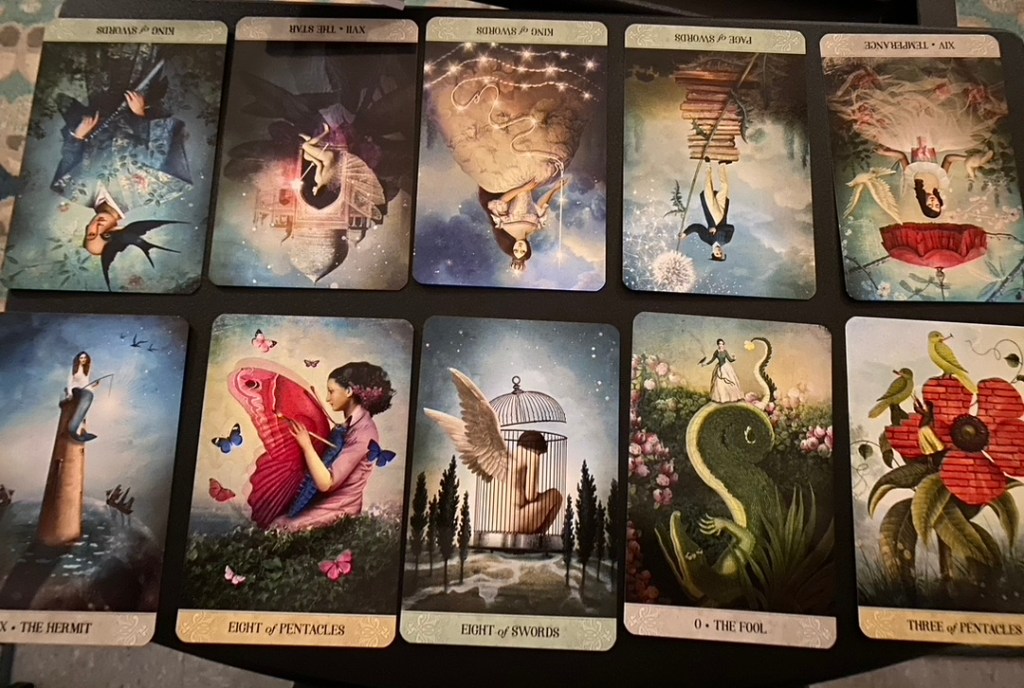
The Tarot is a vast, comprehensive, and complex system of understanding the human condition. With each card of the Major Arcana representing pivotal moments in our journey toward spiritual or metaphysical enlightenment—that is to say, an integration of the conscious and unconscious aspects of our psyches and the achievement of balanced alignment with the external world and perhaps with the cosmic or the divine—we can recognize critical moments that seem to occur in all our lives. We all know what a “Tower” moment feels like. We can all benefit from the temporary suspension of our preconceptions and our stagnant understandings of reality that seems to be indicated by The Hanged Man. We also all know what it feels like to stand in the radiant warmth of the Sun.
But I find the Minor Arcana to be just as interesting and just as relevant to our lives, no matter what century we live in. We’ve all experienced the IX of Swords—a fitful or sleepless night tormented by worry. I think we’ve also all been enchanted by nostalgia, a longing for sweetness in the past or elsewhere, which is rendered in the VI of Cups.
So what does it mean that these cards seem to display images, themes, or situations common to us all? We know that the famed psychiatrist C.G. Jung (1875-1961) was well aware of and fascinated by the Tarot, as well as other “occult” practices. He also established the field of archetypal psychology. In his theories, all of us are born, not as blank slates, but with a mind that is pre-programmed with certain structures or patterns called “archetypes” that would govern how we perceive, process, and live in the world. Even as infants we would recognize the Mother archetype, for instance. As we grow older, we may find a Lover, Warrior, or King pattern ingrained in our personalities.
But sometimes our relationship to the archetypes in our minds may be troubled or problematic. We may mistakenly take another person for our King, and unconsciously give away our power to them.
Events in our lives can be achetypally driven as well, as Jung pointed out with our fairy tales. Some stories seem to be universal. The low-born baby discovering his true kingship is one example. Some universal archetypes permeate the narratives of folkloric and religious traditions.

The Tarot’s seventy-eight cards, though, are not meant to be read as separate and static images. Just as the people and events in our lives weave the complex narrative that is human experience, so too do the cards form narratives when laid out in a pattern called a spread. In the past I believed that spreads had to be prescribed in advance. But now, I begin with a general spread in my mind but I intuitively add more cards if necessary so that the narrative arc of what the cards are telling me seems complete. I somehow seem to know when to stop.
The seventy-eight cards with their rich imagery, meaningful symbolism, and subjectively evocative feelings can offer literally countless interpretations. If we add to that that the status as upright or reversed also carries significance, we add even more possibilities of meaning. And, of course, since the Tarot is an essentially intuitive exercise, there will be as many possible interpretations of any card or any narrative relationships between the cards as there are human beings on the planet.
This aspect of the Tarot—the combination of its archetypal structure and its limitless capacity to form archetypal narratives—is what I find so powerful and is, dare I say, absent from any other divinatory system. I think this what makes the Tarot so profoundly special.
But let’s complicate that a bit further. Jung believed that archetypes were structures in the unconscious and the unconscious has a profound impact on how we perceive the world and how we live our lives. It influences our decisions and actions even before we have a chance to consider them consciously. The relationship between the unconscious and the conscious is a complex one. According to Jung, the unconscious is quite literally unknowable and can only be accessed through indirect means such as through our dreams and through an exercise he called “active imagination.” Part of what makes the unconscious so unknowable is that it works at the level of feelings and images, beneath the level of language that we use to simplify our communications with each other and with ourselves.
What better way to access the contents of our unconscious than through a set of images with potentially profound feelings attached to them? The Tarot!
Let me give you an example of how someone may access their unconscious through reading the Tarot for themselves.
If you come to the Tarot with a particular question in mind or a problem or concern that you would like help in processing, you can lay out the cards however you wish and then begin to interpret them through a combination of the following: memorized and standardized meanings, personal interpretation of the image on the face of the card, and a sense of how all the cards are coming together to provide you with a coherent narrative.
Then, as you try to make sense of the narrative provided by the cards, your unconscious has a chance to begin to bubble up from beneath the surface. As you ponder questions such as: “what does this card mean in reference to my question?” or, “what detail on this card in particular jumps out at me as I think about where it falls in the story?” You place your mind in a position to consider alternate possibilities of understanding that are outside your habitual patterns of comprehension, and you allow randomness and synchronicity to play a role in important new perspectives into your understanding of your current situation and the potentialities that might be available to you.
I look forward to exploring more of this (the unconscious and narrative) and other topics in future blogs! If you have any ideas or suggestions, please feel free to suggest those!
Thank you and I always welcome your comments!
 Jesse's Journey: Reading the Tarot, Living the Life
Leave a comment